Border Image

Everything you need to know about a heart-healthy diet

Your diet can play a major role in keeping your heart healthy. Researchers have found that traditional eating habits from Mediterranean countries are especially beneficial for heart health. You can find more detailed information about this in the following sections.
The risk of a heart attack increases the more unhealthy your diet is. Even though not everyone is able to lower high cholesterol or blood pressure solely through nutrition, many people manage to reduce their need for medication.

A heart-healthy diet does not have to be complicated if you follow a few basic principles. The most important thing is to eat a balanced diet and not to completely avoid certain foods (such as cholesterol-rich eggs) or consume large amounts of so-called healthy foods (like tomatoes for their antioxidants).[1]

The beginning is always the hardest, but once you have kept it up for a while, you will find that a heart-healthy diet is manageable and can even bring new and enjoyable taste experiences.
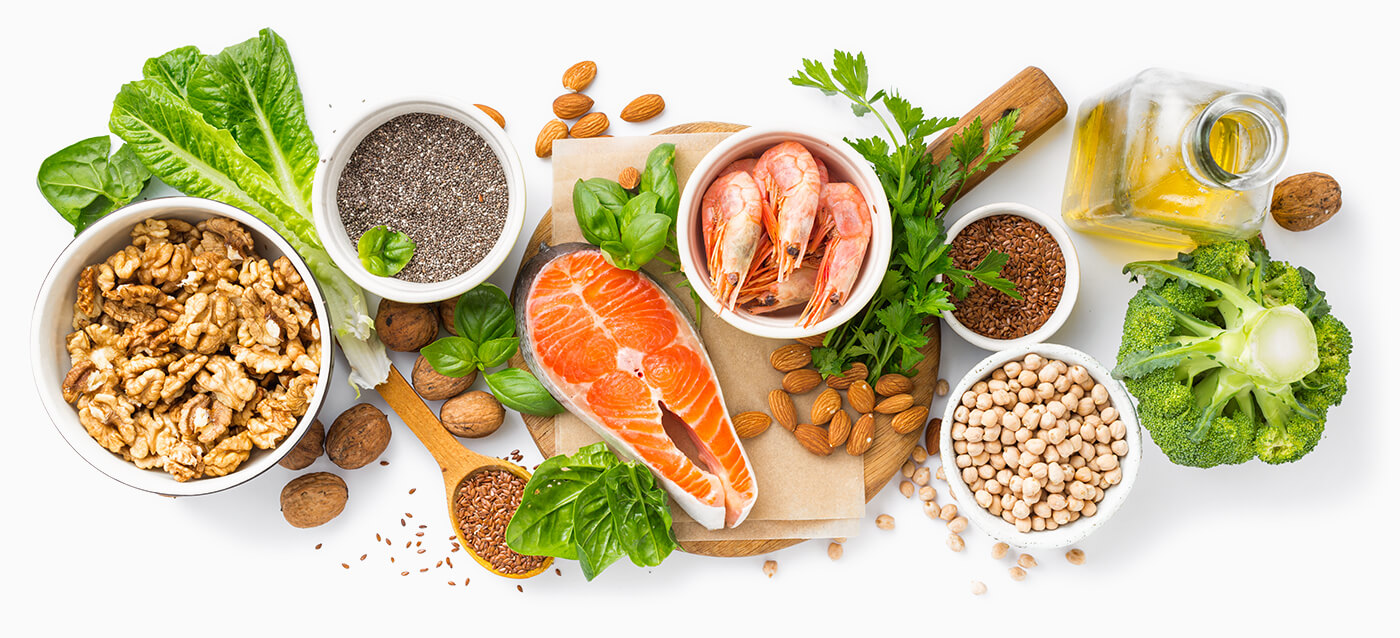
The 3 golden rules of a heart-healthy diet[1]

The basic rule is: it’s all about balance. One unhealthy food is not a problem. But just as many healthy foods add up to create a healthy lifestyle, too many unhealthy foods can be harmful to your heart health.[1]

1. The right fats

Choosing the right fats is more important than simply following a low-fat diet. Monounsaturated fats can protect the heart in many ways, while saturated fats increase harmful LDL cholesterol levels in the blood. You can find a list of suitable foods here. Be cautious with excessive carbohydrate intake as well. If the body cannot immediately convert carbohydrates into energy, it transforms them into unwanted saturated fats.[2]

2. More omega-3 fatty acids

Omega-3 fatty acids help dilate blood vessels and can protect against heart rhythm disorders. They also often reduce the risk of thrombosis.[1] In addition, omega-3 fatty acids have anti-inflammatory effects[3]

3. Eat plenty of plant-based foods

Eat a variety of plant-based foods such as vegetables, salads, whole grains, and legumes, and reduce your intake of sugar, alcohol, and refined flour products.[1]

A good example: the traditional Mediterranean diet[1]

The focus here is on the word “traditional.” This refers mainly to the style of eating that was common in Mediterranean regions between 1950 and 1960. People who follow this Mediterranean diet tend to be less overweight, have fewer heart attacks, and are less likely to develop cancer. The main components of the traditional Mediterranean diet are a wide variety of vegetables, salads, fresh fruits, bread, pasta, rice, legumes, nuts, and seeds. Ingredients are usually locally sourced, prepared according to the season, and seasoned with plenty of fresh herbs and garlic. Everything is cooked with generous amounts of olive oil. Cheese, yogurt, and fish are eaten several times a week, while meat and eggs are consumed only occasionally.

The lesson for Northern Europeans is that they should eat about twice as many fruits and vegetables as they currently do, for example vegetables pickled or served as appetizers, combined with pasta, fish, or meat. Pasta should be prepared with vegetables, pesto, or oil and fresh herbs, while meat or cream-based sauces should be served only occasionally. Northern Europeans should also rediscover legumes, using them as side dishes, pureed as sauces, pastes, or spreads. The fat content of meals is not as important when using healthy oils such as olive or rapeseed oil. More fish, preferably not breaded, should be included in the diet, and meat should be viewed as an addition rather than the main ingredient. The freshness of ingredients is also important. Choose dishes that are simple and quick to prepare so that this lifestyle can be maintained in the long term without losing motivation.[1]

The most important dietary tips for a healthy heart

Although you may know that eating certain foods can increase your risk of heart disease, many people find it difficult to change their eating habits. Once you understand which foods to eat more of and which to limit, you are well on your way to a heart-healthy diet. Our tips will help you get there.

In general, the well-known food pyramid from the Federal Center for Nutrition[7] also applies to people who want to take care of their heart health:

Control your portion sizes

How much you eat is just as important as what you eat. If you overload your plate, take second helpings, and eat until you feel full, you may be consuming more calories than you should. Use a smaller plate or bowl to help control your portions. Eat more low-calorie, nutrient-rich foods such as vegetables and fruits, and avoid high-calorie, high-sodium foods like fast food.[4]

It is also important to keep track of how many portions you eat. The Federal Center for Nutrition (BZfE) recommends using your own hand as a guide for portion sizes. This method is individualized and takes into account the needs of both larger and smaller people.[5] Interestingly, it is also important for your brain to see that your plate is empty to signal that you have finished eating—your visual cues are often more reliable than your sense of fullness.[5]

Table of portion sizes[6]

Food Portion
Large-sized vegetables and fruits, e.g. kohlrabi or apple 1 handful
Small-sized vegetables or fruits, e.g. peas or cherries 2 hands cupped together
Bread A finger-thick slice that fits on the palm of your hand
Side dishes, e.g. potatoes or pasta 2 handfuls
Meat or fish About the size of the palm of your hand
Fat Measured in tablespoons, one portion equals 1–2 tablespoons
Sweets or snacks 1 handful

In general, the well-known food pyramid from the Federal Center for Nutrition[7] also applies to people who want to take care of their heart health. You can drink as much water as you like. A glass of vegetable or fruit juice can replace one of the recommended servings of fruits and vegetables.[6]

That means about 1.5 liters or 6 full glasses of water or tea per day. Aim for at least 3 portions of vegetables a day, or more, and 1–2 portions of fruit. Four portions of bread, grains, or side dishes are also recommended, with at least half made from whole grains. You can have up to 3 portions of milk or dairy products such as yogurt or cheese per day. Fish, meat, sausages, or eggs should make up only one portion per day, with meat ideally being on the menu only 2–3 times a week. Two portions of fats and oils should also be part of your daily intake, along with small extras such as sweets, snacks, or alcohol.[7]

Eat more vegetables and include fruit as well

Many types of vegetables are excellent sources of vitamins and minerals. They are also low in calories and high in fiber. Like other plant-based foods, they contain phytochemicals that can help prevent cardiovascular diseases. Eating more vegetables can also help you reduce your intake of higher-calorie foods such as meat, cheese, and snacks.

Incorporating more vegetables into your diet can be simple. Keep washed and cut vegetables in the refrigerator so they are ready for a quick, healthy snack. Choose recipes where vegetables are the main ingredient, such as stir-fried vegetable dishes or salads with fresh fruit.[4]

Two to three portions of vegetables per day are ideal, but in this case, the more the better. Try to buy locally and according to the season. If you search for “vegetable season calendar PDF,” you can find downloadable guides on many websites. In winter, frozen vegetables are also a good option. However, always check the ingredient list of frozen foods (to avoid hidden calorie traps) and try to make your meals more varied with herbs and spices instead.[1]

Fruit often contains more calories than vegetables due to its natural sugar content, but two portions per day should still be part of your daily diet.

The following table provides a brief overview[4]

Better Worse
Fresh or frozen vegetables and fruit Vegetables with creamy sauces
Low-sodium canned vegetables Fried or breaded vegetables
Canned fruit packed in juice or water Canned fruit in syrup
Frozen fruit with added sugar


Choose whole grains

Whole grain products are healthier than those made from white flour.[1] Whole grains are a good source of fiber, vitamins, and other nutrients that help regulate blood pressure and support heart health. You can increase your intake of whole grains in a heart-healthy diet by simply replacing refined grain products. Be open to experimenting and try new grains such as quinoa or barley.[4] Oats are also good for a heart-healthy diet, as they can help lower cholesterol levels. They taste best in muesli or porridge.

Whole grain products keep you full for longer. When buying bread, it is best to ask your baker, because even finely ground wholemeal flour counts as whole grain, and whole visible grains do not necessarily make a bread healthy. You do not have to take this rule too strictly, though. A balanced diet can also include regular pasta. The main foods to avoid are cakes, cookies, and similar snacks between meals, as they often contain white flour, lots of sugar, and fat, while providing little satiety, making it easy to eat too much of them.[1]

The following table gives an initial overview[4]

Better Worse
Whole wheat flour Whole wheat flour
VWhole grain bread, preferably 100% whole grain White bread
High-fiber cereals with 5 g or more of fiber per serving Muffins, cakes, waffles, cookies, doughnuts, pies
Whole grains such as brown rice, barley, and buckwheat Cornbread
Whole grain pasta Egg noodles
Oatmeal (steel-cut or regular) Buttered popcorn


Pay attention to the right fats

Limiting the amount of saturated and trans fats you consume is an important step toward lowering your cholesterol levels and reducing your risk of coronary heart disease. High cholesterol can lead to plaque buildup in the arteries and increase the risk of heart attack and stroke.[4]

The German Nutrition Society recommends that no more than 30% of daily energy intake come from fat.[8] The Consumer Center of North Rhine-Westphalia advises consuming no more than 2 teaspoons of spreadable fat and 2–3 tablespoons of oil per day. It is also important to note that foods like sausages, chips, fast food, baked goods, and even milk coffee often contain large amounts of fat.[9]

Fitness apps can be helpful in tracking how much fat you consume with different foods. When used carefully, these digital tools can reveal hidden “fat traps” in your diet.

There are simple ways to reduce saturated and trans fats:
Trim visible fat from your meat or choose lean cuts with less than 10% fat. Sausages are less favorable than whole cuts of meat because their fat content is often hidden—salami, for example, is about 50% fat. Use less butter or oil when cooking and serving food. Look for alternatives to high-fat foods, such as baked potatoes with homemade salsa or plain yogurt instead of butter. Eat more whole fruits instead of fruit puree or jam on bread.

It is important to distinguish between good and bad fats.[1,4]

Better Worse
Olive oil Lard
Rapeseed (canola) oil Coconut, palm, cottonseed, and palm kernel oil
Vegetable oils and nut oils Gravy
Cholesterol-lowering or trans-fat-free margarine Cream sauce
Nuts and seeds Non-dairy cream products
Avocados Hydrogenated margarine and shortening
Butter Cocoa butter, found in chocolate
Lean ham Salami
Plain turkey breast Breaded pork chop
Whole grain roll Croissant
Plain frozen vegetables Frozen creamed vegetables
Pretzel sticks Potato chips
Fruit cake Cream cake

When using fats, choose monounsaturated fats such as those found in olive oil or rapeseed (canola) oil. Polyunsaturated fats, which are found in certain fish, avocados, nuts, and seeds, are also a good choice for a heart-healthy diet. When used instead of saturated fats, mono- and polyunsaturated fats can help lower your overall blood cholesterol levels. However, moderation is important, as all types of fat are high in calories.[4]

Generally, use cold-pressed oil for salads and cold dishes, and refined oil for baking, frying, and deep-frying.

Choose low-fat protein sources

Lean meat, poultry, fish, dairy products, and eggs are some of the best sources of protein. Choose lower-fat options, such as skinless chicken breast instead of fried chicken patties. Fish is a good alternative to fatty meat. Certain types of fish are rich in omega-3 fatty acids, which can help lower blood triglycerides. The highest amounts of omega-3 fatty acids are found in cold-water fish such as salmon, mackerel, and herring. Other good sources include flaxseeds, walnuts, soybeans, and canola oil.

Legumes – beans, peas, and lentils – are also excellent low-fat sources of protein and contain no cholesterol, making them a good substitute for meat. Replacing animal protein with plant-based protein – for example, swapping a hamburger for a soy or bean burger – can help reduce fat and cholesterol intake while increasing fiber consumption.[4]

Better Worse
Fish, especially fatty cold-water fish such as salmon Fatty and marbled cuts of meat
Skinless poultry Spare ribs
Legumes Hot dogs and sausages
Soybeans and soy products, such as soy burgers and tofu Bacon
Lean ground meat Fried or breaded meats
Eggs (though they also contain a relatively high amount of cholesterol)


Reduce salt (sodium) intake

Consuming too much salt can lead to high blood pressure, a major risk factor for heart disease. Limiting salt (sodium) intake is therefore an important part of a heart-healthy diet.[4]

The World Health Organization (WHO) recommends no more than 5 grams of salt per day, which is about one teaspoon.[10]

Although it is helpful to reduce the amount of salt you add at the table or while cooking, that is only the first step. Most of the salt people consume comes from canned or processed foods such as soups, baked goods, and frozen meals. Eating fresh foods and preparing your own soups and stews can significantly reduce your salt intake.

If you prefer the convenience of canned soups or ready-made meals, look for products labeled “no added salt” or “low sodium.” Be cautious with foods that claim to have less sodium simply because they use sea salt instead of regular table salt – sea salt has the same sodium content as regular salt.

Another effective way to reduce salt in your meals is by choosing your seasonings carefully. Many spice blends are available in reduced-sodium versions and can enhance flavor with less sodium.[4]

Better Worse
Herbs and spices Table salt
Salt-free seasoning mixes Canned soups and ready-made meals, e.g. frozen meals
Canned soups or ready-made meals without added salt or with reduced salt content Tomato juice
Reduced-salt versions of condiments, such as reduced-salt soy sauce and reduced-salt ketchup Spices such as ketchup, mayonnaise, and soy sauce


Plan ahead and treat yourself from time to time

Many people find it helpful to plan their meals—for example, a week in advance. Create daily menus and make sure to include vegetables, fruit, and whole grains with every meal and snack. Choose lean protein sources and healthy fats, and limit salty foods. Pay attention to proper portion sizes and ensure variety in your diet.

For example, if you have grilled salmon one evening, try a black bean burger the next evening. This helps ensure that you get all the nutrients your body needs. Variety makes meals more interesting and helps you stick to your plan.[4]

Treat yourself to a small sweet from time to time. A chocolate bar or a handful of potato chips will not harm your heart-healthy diet. However, do not let this become an excuse to abandon your healthy eating plan. If overindulgence becomes the rule rather than the exception, it undermines your efforts. What matters is eating healthily most of the time.[4,11]

Further helpful short information

Nuts, legumes, fish…

Nuts are healthy in moderation
These tasty kernels are high in fat but rich in polyunsaturated fatty acids. Cashews, macadamias, hazelnuts, and peanuts are considered particularly good for heart health. Brazil nuts and walnuts also provide valuable omega-3 fatty acids. Unfortunately, this does not apply to coconuts – on the contrary, they can raise cholesterol levels and mainly contain saturated fats.[1]

Rediscover legumes
The term may sound old-fashioned to some, but legumes are real “superfoods.” They are full of vitamins, minerals, fiber, and high-quality protein. It’s time to bring back grandma’s recipe for lentil or pea stew – or search for recipes under “Mediterranean diet” and get inspired by appetizers, spreads, and dips.[1]

Fatty fish is good for the heart
Fish is the exception to the “low-fat” rule. Fatty fish should be eaten 1–2 times a week, for example herring, mackerel, salmon, or tuna. Unfortunately, eel doesn’t count – it contains too many saturated fats. Canned fish is also a good option, as long as it’s not packed in cream sauce. Breaded fish, however, is less favorable.[1]

Flaxseeds for more omega-3
An easy way to add healthy fat (and fiber) to your diet is by using ground flaxseeds. These small brown seeds are rich in fiber and omega-3 fatty acids. Studies have shown that flaxseeds can help lower unhealthy cholesterol levels in some people. You can grind them in a coffee grinder or food processor and stir a teaspoon into yogurt, applesauce, or muesli.[4]

What to do about high triglycerides, high blood pressure, or overweight? [1]

Elevated triglyceride levels
Lose weight if you are overweight. However, you should always lose weight slowly, since triglycerides often rise sharply at the beginning of a diet. Eat fewer carbohydrates, but include more healthy fats with a high proportion of mono- and polyunsaturated fatty acids. Otherwise, the same rules for a heart-healthy diet apply to people with elevated triglyceride levels. Eat plenty of foods rich in omega-3 fatty acids and avoid alcohol and sugar as much as possible. Important for high triglyceride levels: sugar substitutes such as fructose or sorbitol are not suitable for reducing calorie intake. Artificial sweeteners like aspartame, acesulfame K, and saccharin, however, are fine.

High blood pressure
People who are overweight should primarily focus on losing weight. In general, the same recommendations for a heart-healthy diet apply to those with high blood pressure. That means plenty of vegetables and fruit, use salt sparingly, prefer herbs instead, watch out for hidden salt, for example in smoked, pickled, or cured foods, as well as in ready meals. Avoid alcohol. OverweightDiets can make you lose weight, but to maintain that weight, you need to change your lifestyle. If you have difficulty with that, seek professional help, for example from your doctor.

The following rules are important:

  • No crash diets – take your time
  • Eat until full with vegetables and whole-grain products
  • Prefer lean meat and healthy fats – avoid hidden fats and sugary foods such as sausage, cream, chocolate, chips, sodas, and white bread
  • Lose no more than half to one pound per week
  • Include meaningful physical activity (walking, taking the stairs, walking outdoors, cycling)

The difference between “good” HDL and “bad” LDL cholesterol[1]

HDL = High-density lipoproteins are transported through the blood and excreted. This means this type of cholesterol can be efficiently eliminated and is therefore considered “good.”

LDL = Low-density lipoproteins. If there is too much of it in the blood, it can build up on the walls of the arteries and increase the risk of heart attack or stroke. That’s why it is considered “bad.”

Foods that are good for your heart [1,12]

Foods Heart-healthy components For example in
Fish High in omega-3 fatty acids Salmon, tuna, mackerel, herring, and trout
Berries Phytonutrients and soluble fiber Blueberries, strawberries, blackberries, or raspberries
Seeds Omega-3 fatty acids, fiber, and protein Flaxseeds, chia seeds
Legumes Rich in fiber, B vitamins, and minerals Dried beans and lentils, such as chickpeas, kidney beans, or black beans
Red, yellow, and orange vegetables High in carotenoids, fiber, and vitamins Carrots, sweet potatoes, red peppers, tomatoes, and pumpkin
Green vegetables Vitamins C and E, potassium, folate, calcium, and fiber Kale, chard, bok choy, lettuce, broccoli, and asparagus
Fruits Rich in beta-carotene, potassium, magnesium, and fiber Oranges, melons, and papaya
Dark chocolate Fiber and protein increase with higher cocoa content, while sugar decreases From 70% cocoa content – the higher the cocoa content, the better!
Nuts Monounsaturated fatty acids Cashews, macadamias, hazelnuts, or peanuts


Foods that can harm the heart [1]

Sausages: too fatty
Sweets: too much sugar

Nutrients that are important for a heart-healthy diet [1]

Antioxidants, such as vitamins E and C, beta-carotene, and lycopene

  • Neutralize so-called free radicals in the body, rendering them harmless. Free radicals can trigger diseases.

Fiber

  • Supports healthy digestion
  • Promotes satiety
  • Helps prevent strong blood sugar fluctuations
  • Important for a healthy gut microbiome

Fatty acids

  • Saturated fatty acids: increase blood lipids, especially harmful LDL cholesterol
  • Monounsaturated fatty acids: lower LDL cholesterol, which can otherwise lead to plaque buildup in artery walls
  • Polyunsaturated fatty acids are divided into omega-3 and omega-6 fatty acids
    • Omega-6 fatty acids: lower LDL cholesterol but are pro-inflammatory and less beneficial than omega-3s
    • Omega-3 fatty acids: lower triglycerides in the blood, have anti-inflammatory effects, reduce blood clotting, lower thrombosis risk, dilate blood vessels, and stabilize heart rhythm
  • Trans fats: increase LDL cholesterol levels in the blood

Phytochemicals, such as carotenoids and polyphenols

  • Stimulate the immune system
  • Regulate metabolism
  • Have antioxidant and antimicrobial effects

Interesting studies

A Mediterranean diet supplemented with extra virgin olive oil or nuts reduced the incidence of major cardiovascular events in individuals at high cardiovascular risk.[13] A similar study even showed that this type of diet was superior to a low-fat diet under comparable conditions.[14]

Following recommended dietary patterns is a gradual process. Individuals should choose foods that are familiar and enjoyable to them. Every dietary change should be tailored to individual needs.[15]

A heart-healthy diet can also benefit people with diabetes. A diet rich in whole grains, fruits, vegetables, legumes, and nuts, with moderate alcohol consumption and lower intake of refined grains, red/processed meats, and sugar-sweetened beverages, has been shown to reduce diabetes risk and improve glycemic control and blood lipid levels in patients with diabetes.[16]

The American Diabetes Association and the American Heart Association recommend the Mediterranean diet to improve blood sugar control and cardiovascular risk factors in people with type 2 diabetes. A Mediterranean diet may help manage type 2 diabetes and prevent atherosclerosis.[17]

Results from a pooled analysis of four cohort studies suggest that a minimum fish intake of 175 g (about two servings) per week is associated with a lower risk of major cardiovascular disease and mortality in patients with pre-existing cardiovascular conditions. However, this association was not observed in the general population.[18]

Our expert

Dr. oec. troph. Reinhild Quade is a certified nutrition scientist and has been working independently as a nutrition therapist and consultant since 2002.

Her areas of specialization include food allergies and intolerances, neurodermatitis, pregnancy and breastfeeding, child nutrition, and allergy prevention.

She is a member of the German Allergy and Asthma Association (DAAB), the German Association of Qualified Nutrition Therapists and Nutritionists (QUETHEB e.V.), and the German Nutrition Society (DGE e.V.).

Dr. oec. troph. Reinhild Quade

Sources

  1. Assmann Stiftung für Prävention: Herzgesund essen. Mit Genuss der Gesundheit Gutes tun, Link: https://www.assmann-stiftung.de/wp-content/uploads/2013/05/herzgesund_essen_broschuere_web.pdf, abgerufen am 26.3.2021.
  2.  Prof. Werner O. Richter: Taschenbuch der Fettstoffwechselstörungen: Praktische Diagnostik und Therapie, 2003.
  3. Hans Konrad Bisalski, Peter Grimm: Taschenatlas Ernährung, 2017.
  4. Mayo Clinic: Heart-healthy diet: 8 steps to prevent heart disease, Link: https://www.mayoclinic.org/diseases-conditions/heart-disease/in-depth/heart-healthy-diet/art-20047702, abgerufen am 1.3.2021.
  5. Bundeszentrum für Ernährung: Ernährungspyramide: Wie groß ist eine Portion? Die Hand als Maß für die richtige Portionsgröße, Link: https://www.bzfe.de/ernaehrung/die-ernaehrungspyramide/die-ernaehrungspyramide-eine-fuer-alle/ernaehrungspyramide-wie-gross-ist-eine-portion/, abgerufen am 22.3.2021.
  6. Bundeszentrum für Ernährung: Portionsgröße – gemessen mit der eigenen Hand, Link: https://www.bzfe.de/portionsgroesse-gemessen-mit-der-eigenen-hand/, abgerufen am 22.3.2021.
  7. Bundeszentrum für Ernährung: Ernährungspyramide: Was esse ich?, Link: https://www.bzfe.de/ernaehrung/die-ernaehrungspyramide/die-ernaehrungspyramide-eine-fuer-alle/ernaehrungspyramide-was-esse-ich/, abgerufen am 9.4.2021.
  8. Deutsche Gesellschaft für Ernährung e.V.: Fett, Link: https://www.dge.de/wissenschaft/referenzwerte/fett/, abgerufen am 31.3.2021.
  9. Verbraucherzentrale NRW: Wie viel Fett am Tag gehört zu einer gesunden Ernährung?, Link: https://www.verbraucherzentrale.de/wissen/lebensmittel/gesund-ernaehren/wie-viel-fett-am-tag-gehoert-zu-einer-gesunden-ernaehrung-40798, abgerufen am 31.3.2021.
  10. Weltgesundheitsorganisation. Regionalbüro für Europa: Häufig gestellte Fragen (FAQ) zum Thema Salz, Link: https://www.euro.who.int/de/health-topics/disease-prevention/nutrition/news/news/2011/10/reducing-salt-intake/frequently-asked-questions-about-salt-in-the-who-european-region, abgerufen am 31.3.2021.
  11. U.S. Department of Health & Human Services: Heart-Healthy Foods: Shopping list, 2020, Link: https://health.gov/myhealthfinder/topics/health-conditions/heart-health/heart-healthy-foods-shopping-list, abgerufen am 1.3.2021.
  12. Cleveland Clinic: 12 Heart-Healthy Foods to Work into Your Diet, 2019, Link: https://health.clevelandclinic.org/12-heart-healthy-foods-to-work-into-your-diet/, abgerufen am 1.3.2021.
  13. Estruch R et al.: Primary Prevention of Cardiovascular Disease with a Mediterranean Diet. In: The New England Journal of Medicine, 2013, Link: https://www.nejm.org/doi/full/10.1056/nejmoa1200303, abgerufen am 12.4.2021.
  14. Estruch R et al.: Primary Prevention of Cardiovascular Disease with a Mediterranean Diet Supplemented with Extra-Virgin Olive Oil or Nuts, in: New England Journal of Medicine June 21, 2018 378(25), Link: https://www.nejm.org/doi/full/10.1056/NEJMoa1800389, abgerufen am 12.4.2021.
  15. Van Horn L et al. (2016): Recommended Dietary Pattern to Achieve Adherence to the American Heart Association/American College of Cardiology (AHA/ACC) Guidelines: A Scientific Statement From the American Heart Association. In: Circulation, 2016, Link: https://www.ahajournals.org/doi/full/10.1161/CIR.0000000000000462, abgerufen am 12.4.2021.
  16. Ley SH et al.: Prevention and Management of Type 2 Diabetes: Dietary Components and Nutritional Strategies. In: The Lancet, Vol. 7, Nr. 383, 2014, Link: https://www.ncbi.nlm.nih.gov/pmc/articles/PMC4751088/, abgerufen am 12.4.2021.
  17. Esposito K, Maiorino MI, Bellastella G, Panagiotakos DB, Giugliano D. Mediterranean diet for type 2 diabetes: cardiometabolic benefits. Endocrine. 2017, Link: https://pubmed.ncbi.nlm.nih.gov/27395419/, abgerufen am 12.4.2021.
  18. Mohan D, Mente A, Dehghan M, et al. Associations of Fish Consumption With Risk of Cardiovascular Disease and Mortality Among Individuals With or Without Vascular Disease From 58 Countries. Journal of the American Medical Association Intern Med. Published online March 08, 2021, Link: https://jamanetwork.com/journals/jamainternalmedicine/article-abstract/2777338, abgerufen am 12.4.2021.